Tuesday, June 4, 2019

Men teach Women Lead!


I remember just last month my teenage nephew asked if I could teach him how to play Chess because he wanted to impress a girl who was a Chess player. He has recently moved here to stay with my niece, my mother and myself. My niece is a really strong Chess player who has even travelled internationally to play Chess representing South Africa. So when my nephew asked me to teach him, I referred him to his cousin whom he has gotten so close to and spends so much time with everyday; this would make their quality time more productive since they will be sharing Chess wisdom. I was not prepared for his response especially since I assumed he had so much respect for her after she had taught him how to cook; I mean they spend so much time chatting and laughing together and I expect that this means they have mutual respect for each other.

Before my nephew moved to live with us, my niece and I would share the house chores equally between the two of us. We would alternate between cooking and washing dishes: on days that I cooked, she would do the dishes and vice versa. So when my nephew came, I told him he would inherit my share of the house chores, he agreed but he unfortunately could not cook, which I thought was shameful (in the words of Chimamanda Adichie : "I have never thought it made sense to leave such a crucial thing, the ability to nourish one's self , in the hands of others.") So I asked my niece to teach him, and she did and now he is a good enough cook. We enjoy his cooking every second day. So naturally, when he asked if I could teach him Chess, I though the same teacher who was good enough to give him the cooking skill and is as equally skilled in Chess could do the job but he refused saying "I don't want to be taught by a girl!."

At the local Library I had taught some grown ups how to play Chess and they were getting the hang of it, steadily grasping the concepts of the game and getting some confidence as they started winning some games against untrained visitors who have learned how to play from under a tree somewhere! As a way to demostrate to them that they were not there yet, there was still a lot to learn, I would bring in some of the kids I had taught a while back who are really good players and they would embarass the grown ups who would approach the game as if their life experiences gave them an advantage over the Chess board. The week before, I had brought an eleven year old boy and he had all of them begging for mercy.
In the following week I brought my niece who was 13 at the time, two years older than the boy. As soon as she came in I could hear all the men claiming "I would not be beaten by a little girl in Chess. If she beats me I will quit and never play Chess again." She beat them all. They were all heartbroken, sad and confused. Instead of being proud of this brilliant girl they chose to make her feel as though she had done something wrong embarrassing grown up man.

I remember my mother used to tell me how she was always the best learner in all her classes growing up. She excelled in everything and always took first position until she reached Form 1, (Standard 6, now Grade 8) and her father, my grandfather told her he was not going to waste his money sending a girl to school. He thought it would be a waste of money that should be used to buy Cabbage instead. He rationalised his actions by explaining that as a girl, my mother will be taken as somebody's wife and leave his house to take care of another man's house. Which was true to some extent, but even as she moved to live with my father, she still provided for her father and mother and even became financially responsible for all her siblings. After she left my father, she came back to be the head of her father's house carrying all the household responsibilities including building them a proper house. That is because she managed to take herself through school while working in the farms as a kid.

The barriers are shifting but the perceptions still seem to be one sided

South Africa has just created history by introducing its first ever cabinet with an equal number of female ministers as that of male ministers. This is historical and groundbreaking considering the plight of women to be recognised as leaders and generally be offered equal opportunities to prove their abilities. There was a time when South Africans were hopeful to get a woman President but then hey, getting equal representation in the ministries is also good enough. We have to always remember however, that the war for equal recognition is far from over. We still live in a patriarchal society and the sad part is that these female ministers will have to play by the already set systematic rules that favour masculinity.
They will have to work with men who grew up not wanting to learn cognitive mind sports from their female cousins and men who grew up believing that losing to a female was an embarrasment. These women will have to lead men who refuse to be led by women and it would be sad to find that there would be some women too who prefer male leaders to women leaders, because they too are daughters of the same society that raises these men.

The biggest challenge, I believe is the changing of people's perceptions about leaders. In our societies, almost all leadership roles are automatically associated with maleness and females are expected to play the supportive roles. It is in our movies; it is in our schools; it is in our churches; it is in our homes and even in our politics. For as long as the words "Starring", "Principal" , "Pastor", "Head" and "President" trigger a male image, we have a long way to go.

It is the responsibility of these female leaders to uplift the image of women in society by becoming more visible as leaders and unapologetically more vocal and feminine in their leadership styles. I have had the pleasure of watching a video of some powerful women in business explain to their audience how the modern office environment favours the leadership qualities mostly attributed to women: such attributes as compassion, emotional intelligence and transparency among others. The visibility of female leaders using attributes traditionally associated to women to win trust and garner support from the nation will be necessary to convince the girl-child that they do not need to become masculine in order to become leaders, they are enough as they are; such visibility will be very crucial in challenging and possibly changing the stereotypical leadership image.

I personally feel that the most impact could be made by changing the system which favours a specific gender and challenge completely the stereotypical images of both genders. If the trend setting pioneering move is to be truly admirable, it should be signed into law that every cabinet should have at least 50% female representation. Five years is a very short time for making lasting impact and completely challenging leadership stereotypes. We have learned that in the USA, although the 2 terms served by former President Barrack Obama helped in eliminating colour from many young people's visualisation of the word "President", to the many old Americans it has served as an 8 year systematic glitch that had to be over compansated for. We have to worry aswell that if the women who will be serving as ministers have no powers to influence systematic change, their time in office will soon be considered a glitch that needs correcting by the many bigots that surround us. Even so, it will not be a surprise if next election we get a female president with a cabinet of 90 per cent male ministers. As long as the system is geared towards masculinity, having female leaders will make little difference because in trying to prove efficiency the female leaders will also appoint males to other supportive leadership roles.

If we look at the fact that the minister of Basic Education in the past five years or so has been a women and yet the stats showed just last year that even though women made up over 72.5 percent of teachers, only 37.3 percent of Principals were female (www.africacheck.org). This numbers maintained the perception that Women Teach while Men Lead. So in essence, women teach men how to be leaders while the men in their leadership roles try to surpress the women keeping them as their subordinates.

So as much as the responsibility to change the perceptions is in the shoulders of the appointed ministers, it also rests in the shoulders of each teacher and parent to be cognisant and attentive of the ways their words and actions maintain or challenge these imagery stereotypes.
These subliminals are embedded in the ways we react when a girl-child has cracked open her cellphone to remove a simcard or memory card versus when a boy-child does it. This could be in the way we are "understanding" when a girl-child loses a Chess game to a boy-child and find it "unbelievable" and awe inspiring when she wins- it is even destructive when we find it to be embarassing to the boy-child if he loses to a girl-child. Infact, I have noticed that as a result of this, it becomes more painful to the boy-child when he looses to a girl-child. This is because the boy-child feels like he has lost more than just a chess game; he also looses his image as a potential "man" and appears weak to his peers. This is why in practice some of them even try to cheat when they see a checkmate looming. Some break up the pieces in some half-baked show of bravado. In some instances, a few have quit playing Chess for real.
These are some phenomena I had first witnessed when I first took my Chess kids to the district federation's Chess tournaments. I would be surprised by the caucasion kids' breakdown after they lost to my kids. These kids would cry hysterically that the arbiter would have to find their parents to calm them down. The loss would break them, it appeared as if loosing to an African child shuttered their whole reality: it challenged all they had learned or had been taught as true about themselves in relation to the African child or about the African in general. Of course, after a while the kids from this distric stopped crying, they had gradually unlearned the lessons that hurt them and learned new ones. We continued to play other districs and had the same effect on the caucasion kids of both genders as well. It was exciting being responsible for changing social perceptions through the Chess game.

I am hopeful that after this 5 year term, the perception of the political leader would have changed, if nowhere else, at least here in Mpumalanga where the premier is also a Women. The truth is, it is not that women have not been leaders and rolemodels in society, it is only that their roles of leadership have not been recognised as such and not quite celebrated as the roles played by men. It is important for the dream of any child to remain alive and seem possible, that they see and witness role models that look like them.

A lot could be said in this topic but I am afraid I might loose direction if I continued. I will leave the rest for you to add on the comments section. I have daughters and sons that I wish could one day read your comments and feel the paradigm shifting.

I have no idea who made this but I feel it has some significance here. What do you think?

Some references:
https://africacheck.org/reports/women-teach-and-men-lead-gender-inequality-in-south-african-schools-examined/

<script data-ad-client="ca-pub-1945240122822914" async src="https://pagead2.googlesyndication.com/pagead/js/adsbygoogle.js"></script>

Tuesday, May 28, 2019

#UnMuteKhayaAngel?

My name is Eddie, I am a 32 year old unemployed graduate. I don't beat myself up about it too much because I am surrounded by some caring and self-reliant strong women in my life. I am quite intelligent and good looking too, though I do not put too much value on either of these qualities since I can hardly turn either of them into rands.

I have an 8 year-old daughter whose mom is solely responsible for, though I love her with all my heart and hope that some day soon I will be able to be provide for her and be the daddy she deserves. I also have a girlfriend, the woman I hope to be able to do right by and build a life with, I love her so much. She is now 8 months pregnant and will very soon be delivering us a baby girl. Baby Smilo, we call her, after her mom's beautiful character.

Yesterday, the 27th of May 2019, my girlfriend sends me a 30 seconds video of a certain female radio personality making a statement about what I would caption "money and relationships" as it relates to girlfriend allowances (umdizo) and then she told me the lady in the video got fired from  her radio job for making that video. Apparently she brought the radio station into disrepute.

This got me thinking: why would such a big radio station dismiss anyone for expressing their personal views? How is she saying "if you are not willing to give your money, don't bother getting into a relationship" enough to get her fired from her job?
Could it be that she is  essentially saying relationships and love affairs are not for the stingy nor for those without money to share?
It could be argued that the lady here is speaking against financial stingyness in relationships; misers need to keep out of the dating scene. Which in my opinion is not such a terrible thing to say. I know a lot of people who feel that way; if relationships are about 'give and take' money cannot be excluded from the giving and taking and misers are known to be only about the taking. In this sense, the lady is becoming a voice for the marginalised who are drained of their energies in relationships and not compensated in anyway by their partners whom they spend money to look good for; smell good for; they spend money to communicate and also to keep alive for the benefit of these lovers who can afford to show appreciation but choose not to because they have better things to spend their monies on. These are the women Khaya Angel, the woman on the video, is offering up her voice too, and they too deserve to be heard.
The rights and interests of women have been ignored for too long in this patriarchal system that governs our communities and this has allowed men to take advantage of women. This is why the dismissal of Khaya Angel might be contrued as a move to silence yet another woman speaking out for the interests of a marginalised group that we all seem to be disregarding. It happened before with Masechaba by the same SABC on Metro FM when she attempted to offer up her voice for the then abused Babes Wodumo. Men make the rules and woman are expected to tow the line, it seems.

But let us try and look at this another way. Ligwalagwala FM, under SABC has decided to terminate Khaya's contract for her behaviour in a video that is deemed to be bringing the station into disrepute.
It is important to take the contents(all inclusive) of this video into careful consideration before making your personal judgement of whether SABC is justified in the decision they have taken:

1.) Khaya appears to be in an SABC studio while making the video, presumably Ligwalagwala FM. An SABC logo appears on the background and another Ligwalagwala FM personality, Lungile Mhango appears to be walking behing her on the background.
2.) She is setting up relationship bounderies and making financially discriminatory remarks against those looking for love without funds.

Now with that in mind, let us consider why this gorvenment entity would want to "silence" this woman for this statement:

We are living in a time of "Slay Queens" and "Blessers"; a time when young girls aspire to own long weaves of foreign hair and long artificial nails and marr their faces with skin powders that look as light as the palms of their hands; just so they can be able to attract blessers who are as old as their fathers, and sometimes grandfathers, as long as they can afford to take care of them financially. We are living in a time where relationships have been reduced to financial transactions and women are reduced to commodities dispensable to anyone who can afford them. This is obviously a result of the patriarchal system which considered women as children who are incapable of any high cognitive function and thus limiting the woman's influence and participation in the economic life.
Realising this injustice, the government and all of its agancies are trying to correct and redress this shortfall by creating more economic opportunities for women and eliminate the mentality that the only way a woman can get her hands into cash is by getting her hands into a man.

The culture of Slay Queens has been responsible for the derailing of this masterplan and has seen a lot of young girls, filled with a lot of self-doubt and a lack of confidence, trade off their books and school uniform for a weave and some long nails. I would be remiss if I fail to mention how this culture of dependency has been responsible for a lot of violence against women and children, which the government also has a lot of programs to try and combat.
We have heard many cases of women and children abuse where the abused woman would be asked why she would not leave an abusive relationship and she would say "because who would feed my kids and financially provide for me if I leave?" This points out to the toxicity of Khaya's statement: if a woman goes into a relationship for the purpose of finding someone who will care for her financially, she will be so dependant on the partner that it would be very difficult for her to leave even when the relationship turns abusive. Is Khaya not aware of this? Have we not heard cases of children raped by their stepfathers or even their actual fathers but their mothers will not report them to the police for fear of starving while the man remains locked up in prison?
I would like to think, as a father of two daughters, that the reason why SABC chooses to dissocciates its brand from such utterances is that they do not wish to be seen as promoting a culture of female dependency; a culture that promotes female helplessness in keeping with the backward stereotypes about women.

History teaches us that women are capable of standing up, not only for womens' rights but for the rights of all humanity just like they did in 1956 as they marched agaist the pass laws in South Africa, a day marked in the SA calender as the National Womens day.
Even though I feel launching a march against the SABC decision would make for a great statement against the perceived muting of a woman, I also feel it would be counter progressive to what women as a collective are moving towards in this time. It is against the women agenda of the 21st century.
I personally pride myself for being the father of way too many daughters (my brother's daughter whom I am raising, a Chess protege; my late sister's brilliant gymnast; my 8 year old academic genius and the character on the way) because I believe that the 21st Century belongs to the female and I wish to be there as a bystander cheering my ladies on or stand guard as a security to ward off trouble.

I know I mentioned Masechaba being dismissed for lending a voice to the voiceless but I am aware that Masechaba's cause was more noble than Khaya's. Masechaba used her plartform to speak up against violence against a woman. Though it was out of turn and apparently an ambush for the Babes who thought she was only there to promote her new music, it was still more noble than a statement promoting dependency and subordination. It would have been progressive to see a women-led march aimed at reinstating Masechaba.
I am sure I speak for all the broke guys when I say "If Khaya had her way, we would remain single forever and would probably have to take up arms and challenge the mandate to offer equal opportunities to women through affirmitive action."

So my girlfriend sent me this video then she shared a poster she picked up from a WhatsApp status asking what I thought of it. The poster was about a planned marched aimed to force the SABC to reinstate Khaya Angel. This was meant to be my response to it. I really hope it is in the good side of history.
As always, your comments are appreciated

<script data-ad-client="ca-pub-1945240122822914" async src="https://pagead2.googlesyndication.com/pagead/js/adsbygoogle.js"></script>

Monday, May 20, 2019

African or Black: What Race are you?

While discussing the issue of black and white peices in Chess and the significance of the colours of the forces being such opposites, my friend and I agreed that it is necessary for this "war-game" that the enemy forces are easily identifiable as such- opposites-enemies.
Our discussion ended up leading us to wonder how we Africans ever came to be known as black people while our erstwhile counter-parts (colonisers) came to be known as whites. Black and white being stark opposites like darkness and light: one is identified with good while the other with bad; the one is identified with cleanliness while the other with dirt. It has been suggested by some philosophers (St. Augustine) while elaborating on how evil does not exist as it is merely an absence of good, he used the example of darkness being merely the absence of light. Thus suggesting that darkness is a none-thing, it is light which is an actual reality and darkness signifying its lack. A similar claim is made in science where it is stated that light is an energy and it is measurable while darkness cannot be traced and only exists in the absence of light. How is it then that Africans became known as black people and caucasions known as white people? Is it possible that we were so-called just for the purpose of setting us apart from the colonial rulers at the time? Is it possible that our colonisers were responsible for the "black" label that became attached to us to sort of signify that we are nothing without them?
I wonder if there was a time in history just before colonisation that Africans were just that, Africans or rather identified using their tribes?

I remember in Shakespearean literature, characters of African descent were referred to as moors, particularily in Othello where Othello himself is labelled a "moor". Even in the Shakespearean play we can sense that this is neither an affectionate nor an endearing term used to regard the race, it is filled so much with "otherness" and rather used to highlight differences than to appreaciate the other. Quoting act 1, scene 1, line 99 as Lago addresses Brabantio, Desdimona's father regarding Desdimona and Othello's affair:

3
Iago. 'Zounds, sir, you're robb'd; for shame, put on
your gown;
Your heart is burst, you have lost half your soul;
Even now, now, very now, an old black ram
Is topping your white ewe. Arise, arise;
Awake the snorting citizens with the bell,
Or else the devil will make a grandsire of you:
Arise, I say.
 We also learn further that the term "moor" was mainly reserved for the non-caucasions espeacially those that ruled Spain and Portugal between the years 700AD and 1400. The moors refered to included various groups of African and Arab nationalities who were Muslim by faith  and were largely responsible for the civilisation of Europe bringing in infrastructural development and sanitanion "Their significant contributions in mathematics, astronomy, art, and agriculture helped propel Europe out of the Dark Ages and into the Renaissance. " (AfricanHolocaust.net)
The moors brought Europe out of the dark ages by bringing enlightenment in Sciensce, Mathematics, Art and commerce but I doubt those sentiments are captured in the term "moor". In fact it is said that the term is derogatory in nature and as such, the people referred to as Moors never used the term in referring to themselves in their own literature (which conveniently enough is very limited).

We also learn that in the 16 Century a new word originating from the Latin word for "black" is used to refer to people of African descent: that word is nigger and it has, and still is up to this point, been regarded as the most derogatory term to use especially to refer to "black" people. In light of this, it is quite absurd that we would be offended when referred to as "black" only when it is said in a different language but be okay with it when it is said in the English language. Are we against the Latin language or the colour (label) black?

Growing up I used to think we were called black people because we had a really dark skin tone and thus we were so labelled in referrence to our skin colour. I have grown to learn that such cannot be the case since the people referred to as black range from the darkest of skin tones to the lightest, and almost pale, skin tones. Also, the dark skin tone is not necessarilly reserved for Africans, it is also found in other nationalities such as the Indians and other Asian nationalities but they are not referred to as "black" people (except in South Africa where, since apartheid, black means non-white). The hair colour cannot be the reason either because people with black hair are found the world over. Could it be then that our continent, Africa,  is considered a "Dark" continent: Unenlightened and still stuck in the dark ages? Or is it that the inhabitants of the African continent are so powerless that they cannot even control what labels are put on them by those controlling their resourses?

I fail to understand the contestation against "black" people being refered to as Africans given that the people living in Asia are Asians, those in America are Americans, those in Europe are Europeans and can all be racially identified (or classified). Even more to the point, those from India are Indians and those from Japan are Japanesse etc. and when one speaks of a Japanesse, we have an idea of the people referred to without conjuring up any negative stereo-types associated to the race.

So I ask, why are we okay being referred to as "black" people knowing the negativity associated with the colour black especially since it means "nigger" in Latin? Are we not Africans? I believe the term "black" as used to refer to the people of African descent should be met with the same contempt when used in English as when used in Latin.
We cannot as a people be accepting to being defined and labelled by our lack or by any lack whatsoever. We also cannot accept being labelled by a singular trait found in  some of us as it cannot define our whole race. We are not "black" people for any reason whatsoever, we are African. The claim that there are other races that are at home in Africa cannot hold as an objection to us being referred to as Africans, they too can be referred to as European-Africans or Asian-African just as our brothers and sisters of African descent found in other continents are known as African-America or African-Europeans for example. A Tsonga man is not a black man, he is an African man from the Tsonga tribe and calling him "black" ought to be considered derogatory. It is better when your label traces your origins and embodies your history rather than it becoming an insult. This "black" label as used on African people is tantamount to calling an extremely dark person "m'nyamane"  or "Blackie" as we used to call black dogs as kids and it should be frowned upon.
That is just my view, it would be interesting hearing what you think.

<script data-ad-client="ca-pub-1945240122822914" async src="https://pagead2.googlesyndication.com/pagead/js/adsbygoogle.js"></script>
Some references

 http://www.opensourceshakespeare.org/views/plays/characters/charlines.php?CharID=brabantio&WorkID=othello&cues=1

https://africanholocaust.net/moors-black-history-or-black-mythology/

Wednesday, January 2, 2019

New Year's Inspiration

Have you ever felt like the world was against you? Have you experienced the feeling that everything good that you are trying to accomplish will just never be because there is an even stronger force of evil working against you? Reaping up every thing you are planting? Poisoning every seed you put on the ground and just pissing all over your hard work and efforts that when you look back you wonder what in the world you spent so many years trying to build?! When the kids you tried to keep out of the negative social effects by teaching chess to are now the very ones sharing a bottle of cheap whiskey and rolling weed on the streets corners.

When the same girls from your poetry club that spoke a whole lot of sense while reciting The Psalm of Life are now the same ones pushing bellies walking around with proof that they are sexually active teens?

What becomes the point of ever doing anything positive to effect social change when you have experienced such? When you hear 12 year olds budget for beer bottles to drink on new year's day and hear confessions from them that they had beer on Christmas day and plan to switch up on new years?

When you walk back home after midnight from celebrating the end of one year while welcoming another and come across hundreds of teenage boys and girls piss drunk and barely standing on their own yet still drinking and dancing and screaming in naive jubilance.

How crazy would you be to actually get up with the beginning of a new year and start planning new youth development programs knowing fully well that it would make little to no recognisable impact anyways.
Such is the existential crisis I find myself faced with as I suddenly came to a realisation that I may be pushing a rock up the mountain like Sisyphus, only to watch it roll back down again. The process is the same year-in-year-out and when I look back I realise I have not moved much. I have to go downhill and get the rock again and get excited about the prospects of pushing it uphill one more time and hope things end differently this time around.

I guess one can get some satisfaction from recognising that the process is more or less the same for everyone else in their chosen fields of employment. For instance if you are a gatekeeper somewhere and have been for years, when you look back at the contribution you have made for humanity you realise that there was none. You only delayed a few people from getting where they were going to end up anyways. You stopped them for questions and gave them some rules which they may or may not adhere to, much like a school teacher. I'm certain teachers at some point realise the magnitude of their Sisyphian rock especially when they are served at a Super Market or searched at the gate by their former A-student whom they thought had the potential to discover the cure for cancer or possibly rewrite the Bible or use their genius to perfom some other brilliant feat.

I remember how my mother always used to shout in anger everytime I made an excuse about not going to church. She would always say how I was raised the Christian way and needed to continue observing the ways of the lord. And as she got tired of trying and realising I wasn't budging, she would tell me stories of how most grown ups who were raised in the church always remember the power of prayer when they are in trouble; even after having turned against their parents religious teachings and taken up any of the "unsavoury lifestyles" (whether a life of crime or turned into alcoholics or prostitutes). They may stray away, too far away but if their foundation is good and solid...there is still hope for them, she would say.

That got me thinking of my one friend, Thabo who came from a good religious home and was an A-Student in High School but turned to drugs and alcohol when he got to university. His situation got so bad that he even got kicked out of University along with other peers in first year. A few years later he is on his way to attaining a PHD in Physics. He holds a Masters Degree in Physics from the University of Witswaterand while most of the peers he strayed with ended up getting chewed up and spat out by the streets. Thabo had a good solid foundation and as a result, when he got shaken by life, he did not break.

It is such stories that give us hope to get up and do some more for the youth in hope that we at least lay a good enough foundation to offer them support when life happens to them. We cannot hope that they don't attempt to have the fun that their peers are having in their community especially in a community like Pienaar which offers very little alternatives for entertainment for young people.

We look on as the boys and girls we marked and trained as future leaders partake in the very activities that destroy young minds. We listen as they sing along to lyrics of songs meant to dumb them down and make them get excited about a 30% pass mark. We watch and hope that our teachings and lessons offered will at least delay them like that gatekeeper who reads them rules so at least they join the self-destructive party after we have helped them build a stronger self.

Maybe ours is not really to change the society but rather to help the kids we encounter build a stronger amour to withstand the effects of this society. That even as they go through the hormone infused stage of the Romeo and Juliet type of love, they are strong enough to come out intact on the other side. That even as they experiment with the substances meant to destroy their minds, they are at least resilient enough to question it at some point before it is too late.

We give them values that would sustain them long after we are gone and forgotten. Skills that they can always bounce back to when a need arise.

We are indeed pushing the rock of Sisyphus but when I have pushed mine, it really leaves a mark and others will come after and follow that mark as they struggle with their own rocks. This is the rock I have chosen and I will continue pushing it up and down that mountain until one day someone grows up to take it over.

There is hope after all

<script data-ad-client="ca-pub-1945240122822914" async src="https://pagead2.googlesyndication.com/pagead/js/adsbygoogle.js"></script>

Wednesday, December 12, 2018

Piecing together the pieces that make up The Black Chronicles RFTDS


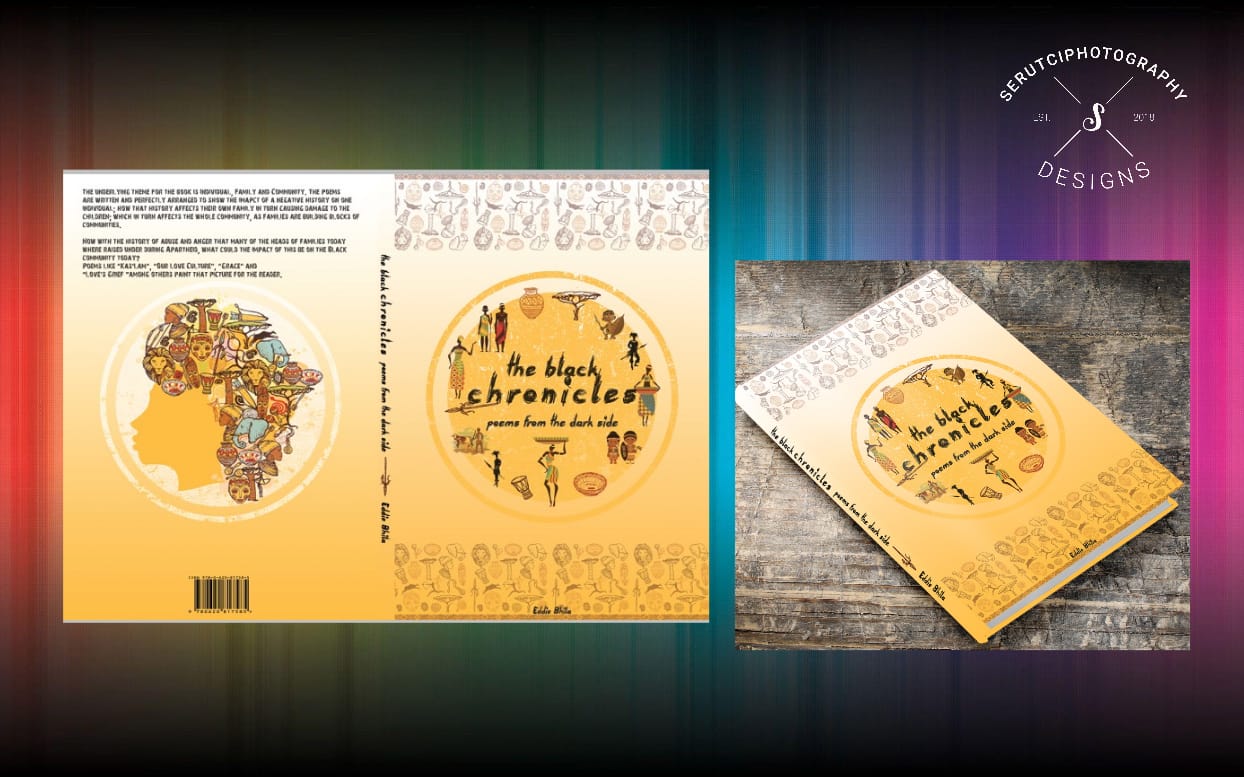
The Black Chronicles is a book written from a vulnerable position. It is mostly written from the perspective of a young boy child who has experienced neglect and witnessed abuse from his father . He is at a point where he realises that all this is unnatural, it does not feel right. For one the father needs to answer for the negative environment he has created in the home; this hostile setting conducive for the brewing of hate, fear and anger.

This youth is also confronted by the inevitability of growth and fears that he might grow to be just as his father is: abusive to his women (plural) and neglectful to his children. This is a reality the boy fears and dreads as he, unlike his other siblings who have adjusted and acclimatized to the environment, is sensitive. Though not mentioned in the book, he has experienced love from his mother and his other siblings are raised by a stepmother who now lives with the father.
So when this boy who has had the experience of love is put in this environment full of hate and anger, he starts to feel conflicted and realises he has to confront his father about it. But his father never has time to listen to his kids so the boy puts it all on paper. Thus in the first part of the book you have the young man's concerns as he holds his father hostage and forces him to listen and spend time with him. The book will essentially hold my father hostage as at some point he will read it and finally listen to the 16 year old me.

The other vulnerable voice through which the book speaks is of a young girl who had just passed and feels her family and community are all responsible for her death. She feels that their lack of action and neglect has led to her demise. The girl can be assumed to have died from the hands of her blesser/sugar daddy or from a virus that can be contracted through promiscuity which society condoned through their silence and inaction against such.
Letter to my pallbearers speaks to every member of society and asks of them, what role are you playing to protect the vulnerable in society? Because if you do not play any protective role, you are complicit and could be accused of playing a supportive role for the perpetrators of abuse.

We also hear the voices of women in abusive relationships struggling to get out for reasons of dependency and fear of social ridicule if they were to leave their husbands and return to their father's homes. The piece titled "Entropy" wakes us up to another kind of abuse other than the common known physical abuse... These women are not fictitious, they are my stepmothers. Some went out, some could not and are held prisoners in their own homes.

As the reading progresses, so do the concerns of the growing young boy and he elaborates on those concerns he spoke of while holding his father hostage. He paints his concerns and confusions about love on "Love's Grief", he wonders about the right time and age to wed on "Stage and Age" as his peers have married at certain ages; he voices out his political opinions for his father's benefit on a few pieces on the section while also dealing with the grief from a loss of a dearest sister.

The section concludes with pieces that highlight the effects these abuses in a household have on the community as a whole. We see the insensitivity of the male character on "The Birth and Death of Hate" which aims to demonstrate the effects of raising kids under hostile environment and the effects it has on the black community. This is not to excuse the abusers and violent characters in our communities as forces of nature arising from our own creations. This is rather to help us understand that our actions have far reaching consequences for the whole community.

The next section titled "The Black Heart and All its Darkness" deals with the struggles to love for that same boy raised under a household with no love. He does not know what love is. He thinks love is that elusive feeling that cannot be explained. He thinks love is like a mirage that he needs to be constantly chasing after just for the cause. He also thinks love is pain, emotional pain caused by frustrations and unsatisfied needs for attention. He has a void inside created in the house hold he grew up in and he constantly seeks a young maiden who could just fill it up for him. He seeks a girl, a lady, a woman who could make him feel loved so he could feel whole again. He is broken. The saddest thing is that in such a broken community where all the parents are alike, he is doomed to meet a woman just as broken as he is and they will continue to break each other apart...or he will just finally settle for being "The Dark Blanket" in those cold nights.

This section just demonstrates the difficulty of loving and finding love when you have never seen love; never experienced love nor even been loved enough to give it. Love and Pain become one. The ying and the yang! The good and the bad! Food and Liquor! A trick and a treat!

Realising the challenges of life as presented by his own history, the young man starts thinking about things beyond himself. He looks for inspiration to go on and starts contemplating about the value of a life. The section on "Black Thoughts and Other Emotions" represent a transcendence from the self and into greatness. The youth starts contemplating about the meaning of his life and resolves to give meaning to his life through his actions. He resolves to make a difference in his surroundings and bring some light to this darkness he was raised in. He makes "A Solemn Resolve" to live and be remembered for what he did.

The last section is titled "Black Progress". It represents hope in that the new generation will do things differently. It starts off with a piece titled "A Baby Born". This baby brings hope and new vibrancy to the black community. This baby, "The Black Pawn" represents the hope and future leaders of the black community.

 This baby will be guided through to promotion by this young man who had to face and overcome all of his personal and emotional struggles to get here. Chess might be the new baby born in the black community or it could even be the young chess Phenom, the young master Mhango who is the new baby born representing this bright new light that suddenly shines in the black community.
This section represents new hope and the piece titled "The Chronicle" reminds us not to make our struggles the inheritance of our children. It reminds us that we need to confront and conquer our challenges so the next generation does not have to. They will have their own struggles waiting for them.

This book is written more from heart than mind. It is more vulnerable than anything and inspires the same emotions from the reader. It allows you to feel and exposes your vulnerability then it carries you through that roller coaster of feelings to bring you to the next level of your existence. That of living for a bigger purpose than yourself. Selfless service to your community and to the next generation. That is a bigger purpose than living for self-enrichment.

This is more a work of heart than a work of art. And yes, it is dedicated to my beloved late younger sister Beatrice, forever the love of my life. The closest soul to mine, closest thing to an angel I'd ever known...then she became one.

I hope this sheds some light to those who own a copy. Happy reading.

I am hoping the next question after this essay would be "where can we get a copy of this book"?

To which I will say: www.theblackchronicles.net

Call or whatsapp :0715814519

<script data-ad-client="ca-pub-1945240122822914" async src="https://pagead2.googlesyndication.com/pagead/js/adsbygoogle.js"></script>

Thursday, December 6, 2018

Turkish Delight

A nine hour flight takes them from OR Tambo International Airport to Istanbul in Turkey where they have to connect to a City in Turkey known as Konya. It is a one hour flight to get there. In total, it took ten hours of flying to get team South Africa to Konya in Turkey for the World U16 Olympiads. Msogwaba Chess Club has a player in Europe, this here is an incredible milestone.


As soon as they arrive, CM Banele Mhango complains about the weather in Konya. It is extremely cold the whole day through. Well, at least they get a day after arrival to acclimatize and get over the jet leg. As it happens, that was not the only thing this international Chess super star of ours had to deal with.

Playing board 2 for the South African U16 Chess Team in the World U16 Olympiads, CM Mhango is paired against a 2300+ rated Fide Master from Poland for the fisrt round. We had the white pieces which is usually an advantage for the Candidate Master(Fide Master elect), he hardly loses on the white pieces. We were soon to discover that the levels are different. 2300+ rating in the World stage over the board is no deception. Poland made light work of the SA team beating them 3.5/4 with only a draw on board 4. Our young Master lost.

Game two he is paired against an even higher rated player. Still playing board 2 for SA, Mhango plays a 2400+ rated International Master from Azerbaijan. He has the black pieces this time. We have to be worried, but we chose not to. The recent World Chess Championship between Caruana Fabiano and Magnus Carlsen has taught us that Black is still ok. In fact, playing the black pieces or the white pieces does not offer an obvious advantage anymore. That is why the World Chess Championship 2018 ended in 12 successive draws till it had to be decided on tie breaks. We were calm as it starts but the game soon turned south and before it got worse Banele resigned. He was getting frustrated now, none of his strategies are working for him. He felt he could give it one more try since next game he had the white pieces. This players are strong but he still felt he was strong enough to compete against them.


Game three, he took a break while South Africa played Ireland then returned on game 4 to take another chance against a Mexican Candidate Master rated 2000+. Still above young Mhango but our CM felt his punches could reach that high. They did not. It sent him to a mini depression. Never in a very long time has CM Banele Mhango played a Chess tournament and lost three consecutive games like this. The boy has gotten so used to winning losing felt too strange. He suddenly missed home. Not home where family is but rather home where winning is easier. He was so used to winning that winning felt familiar and when he started losing, he felt lost. He complained that these people play a different kind of Chess than he was used to. They think differently, they respond differently and it just confuses him. He was frustrated and did not know how to prepare for the next game. I have never played on that level myself, I cannot assist. I could only sympathise.

I decided to call for help on his behalf. I contacted South Africa's current National Chess Champion International Master Johaness Mabusela. He's always been supportive and offered to be there for the young Master whenever he needed him. Well he needed him right now and IM Mabu jumped to his rescue. He analysed Banele's previous games and immediately highlighted on a few Chess principles Mhango had broken. He reminded him of the importance of imbalances and that when ever his position was bad, he needed to focus on the few positives and advatages it offered and build on those. Then he added some few words of encouragement to pick the young man's spirit by reminding him never to fear his opponents regardless of their rating and title.

After this session with IM Mabusela, CM Mhango never lost a single one of the remaining five games he played. The next game was a draw against a Turkish patzer which was followed by a win against a 1500+ from Kyrgyzstan and a draw against a 2000+ rated player from Romania. He followed up with another win against an Algerian Fide Master of equal strength then finished with another draw against another 2000+ rated player from Iceland.

Often times we miss the distractive impacts of sending our players out to compete in higher levels of competition without properly preparing them for it. I read a quote once some time ago that reads: "It is cruel to put a child in a position where they care about winning and not prepare them for it."

Chess is a highly personal sport and losing a game, no matter the level of strength of the opponent, affects you personally and emotionally.

I hope, from this experience Chess South Africa realises that it was a mistake to send a team to the World U16 Olympiads without offering them any form of training or preparation before hand. The senior team received coaching from a Grand Master and even travelled with the Coach to assist them with game preparations and other much needed coaching during that tense period. Hopefully the same can be done for the Youth team in future. South Africa has enough International Masters with the needed experience and exposure, Chessa can consider using their expertise and experience to support the junior team in future. It is in the juniors where the future of chess in the country lies and we cannot afford to break their spirits in this manner so early in their Chess carreers. This was a great learning curve indeed.

South Africa finished at position 43 out of the 46 participating teams. The scores of all the other players are attached below.

This has been an incredible experience for our golden black boy here. After missing the World Youth twice in a row, the World U16 Olympiad gave him the similar experience he would have had at the World Youth. He has finally seen Europe and had lots of memorable experiences to treasure for ever. He has made new friends and strengthened old friendships within the International Chess Community. This has been a delightful Turkish experience in Konya.

We would like to take this opportunity to thank the sponsors who made this trip possible. Talent would be wasted if it wasn't for your continued support.

The Children Matter organisation paid for the flights, all ten hours times two of them! We greatly appreciate your partnership. You give our youth a licence to dream.

To Kolano Consulting who paid for the registrations fees for the event, thank you. We know you have your hearts set in improving the black condition and this gesture of support from you demonstrates the role corporates can play in improving social conditions in black communities. You are our role models and our youth have leaders to look up to in you.

To Dr Mavuso of Kanyamazane medical center who paid to get us from Msogwaba to OR Tambo International Airport- we trust we always have your support as a community of Msogwaba. Your dedication in supporting sports development in our community fuels our desires to do more because we know that when we need you, you do what you can and it is appreciated. Every community needs a good doctor!


<script data-ad-client="ca-pub-1945240122822914" async src="https://pagead2.googlesyndication.com/pagead/js/adsbygoogle.js"></script>

Wednesday, December 5, 2018

The Black Chronicles' Argument

The Black Chronicles makes a philosophical argument on the black commuity. The argument is that the black situation will continue being perpetuated from generation to generation as long as nothing changes. The violence will continue, the abuse of women and children will become a norm for as long as fathers leave their sons development to chance; for as long as mothers allow their daughters to learn the ropes on their own. The poverty and unemployment will also persist as long as we continue doing the very things our parents were doing, in the same way they were doing it , that is aspiring for employment and afraid to initiate ventures of passion. Nothing changes if nothing changes. Our children will never learn how to love as long as we love the same way that our parents where taught to love by a system of hate.

The black community is cast into the shadow of time. We are stuck in the dark and this is the result of the apartheid system that governed our country less than a generation ago. Our communities were formerly bantu stans and labour reserves that were never intended for productive human existence. Even their setups do not inspire creativity which makes it extremely difficult for most people coming from there to flourish in life. There are no recreation parks, no relaxations spaces nor any social space open to all members of the community to allow for open social interaction. All we have are a lot of tarvens and churches; a space for the "unholy" alcohol drinkers and a space for the holy and faithful God fearers. The dichotomy found in the black community...if your father was a pastor, then you grow up in church and become a devout christian. If your father was a drinker, then your fate is set. No other options available in our communities. This also perpetuates a division within a community as there are no places where the people from each side can freely come together to socially interact.

On top of the religious and social division, we now have political structures which also seem to be causing more divisions and highlighting differences in individuals from party to party and from structure to structure. These divisions pose a challenge for the black community when people have to engage on ways to improve the community and offer platforms for those with ideas intended to build a better tomorrow for our children.

All of these divisions, all of the anger, the hate , the violence and fear are the legacies of apartheid. The after effects of a traumatic period from which no Black South African has fully recovered. No Black Community has fully rid itself from the negative emotions that were part of the daily experience in the townships during apartheid.  People are going on about their lives hoping the memories of the past will stay in the past but they do not. The past has shaped our parents in ways that they are unaware of, subconciously influencing their every thought and decision. The fear and anger of the past is continuosly being fed into the hearts and souls of the next generation by their parents who sucked it from the breasts of their mothers.

How else would you explain the continous abuse of children by their parents and neighbours in the community? When a mother would beat up a 2 year old, full palm clap on the face for breaking a few eggs.

When a father takes out a leather belt and whips with all his might on the naked body of a 3 year old son who scratched his favourite record (CD).

Such acts of violence promote violence in the household and community and are a result of a violent background. These acts also instil fear in the hearts of the children, which further victimise and make them targets for more abuse such as molestations. When an abused child is molested, they feel they have no one to turn to. It is even more difficult when the same person molesting them is the head of the household whom is feared by everyone in the household. Sadly this is usually the scenario: the father, head of the household is a violent man who beats up his wife until she is round on the face. The wife, being abused takes out her anger and frustrations to the kids who are now afraid of her wrath. Now when the father starts molesting the kids, they feel they have no one to turn to as they are afraid of the mother and the mother is afraid of her own husband. Thus the kids feel that they are doomed.

The Black Chronicles puts all this into perspective and paints the picture to the reader and holds it up with the implicit question; do you think this is right? Do you realise how this abuse and violence is destroying our communities.

The book challenges the reader to reflect on their actions. Reflect on the nature and structures of our communities. Upon reflecting, the reader will then have to ask themselves if their contribution in their environment is life giving or life threatening. What role are you playing in the shaping of a better community for the future?

There is a scientific concept known as Enthropy that my scientist friend once explained to me. The concept of Enthropy states that everything is in a state of constant decay. This means that the nature of things, anything is constantly deteriorating and if we do nothing to maintain or improve it, it will only get worse. This is true for relationships. This is also true for our communities. If we do nothing to improve ourselves, our communities will not improve. If we do not make conscious decisions to improve, the subconcious ones will be made and they will be influenced by the hate, anger and fear that we have inherited from our parents who were broken by a syetem of hate.

The Black Chronicles says to the reader, before you punish your child for that infraction, think carefully if this decision is not influenced by an anger the child has nothing to do with. We need to deal with these emotions decisively but I am afraid I don't have any solutions to offer on how to psychologically deal with them. However what I do feel I am in position to offer is the advice that we consider our actions and constatly reflect back on the decisions we have made and correct where we find the decision was inspired by fear or anger. The old system and its emotional impacts has to end in this generation.

There is a section in the book titled: Black Progress. This section shows that there is hope that change is possible as long as our actions are geared towards creating that change. New rolemodels are made, champions are created and some light is coming to the dark side. The is a poem here titled The Chronicle. This poem encourages us not to allow our own struggles to become our children's struggles. We have the responsibility to deal with our own challenges until there is none of hem left when our children grow. That is improvement. The old one's may have failed in dealing with apartheid completely but they did their part, the laws and politics have changed. It is ours now to deal with the emotional impacts of it. The inferiority complexes, the anger and abuse that was planted in our communities. It is on us now to uproot them and get rid of them for good so our children start on a slade cleaner than ours
<script data-ad-client="ca-pub-1945240122822914" async src="https://pagead2.googlesyndication.com/pagead/js/adsbygoogle.js"></script>